DIVE DAUIN
Macro on the doorstep, islands on the horizon
Dauin gives you two kinds of diving in one place. On the doorstep is the black sand coast, a slow, eyes-down hunt for some of the rarest small creatures in the sea. A short boat ride out are the islands, Apo first among them, where the diving opens right up into coral walls, turtles and blue water. You can spend a morning hovering over a frogfish the size of your thumb and an afternoon drifting a wall with jacks streaming past, which is a range very few places can offer. Here's what's on.
Shore Diving
World-class muck, a few minutes up the coast
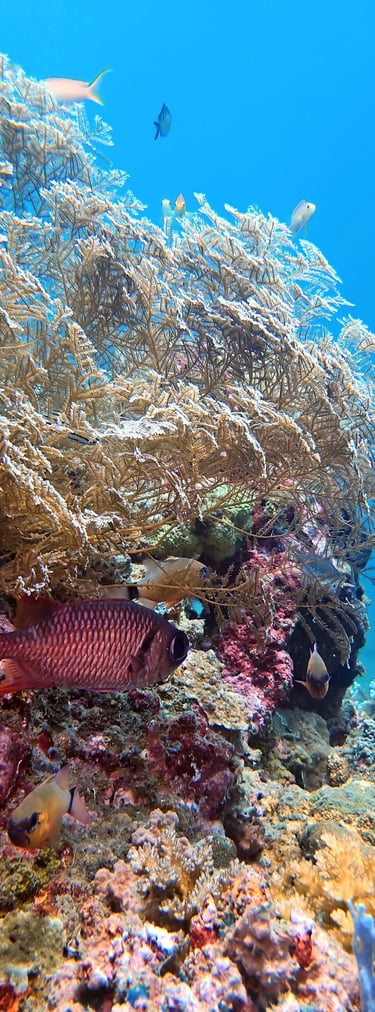
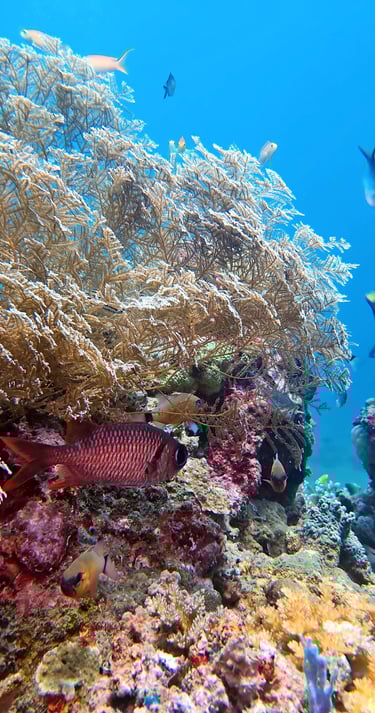
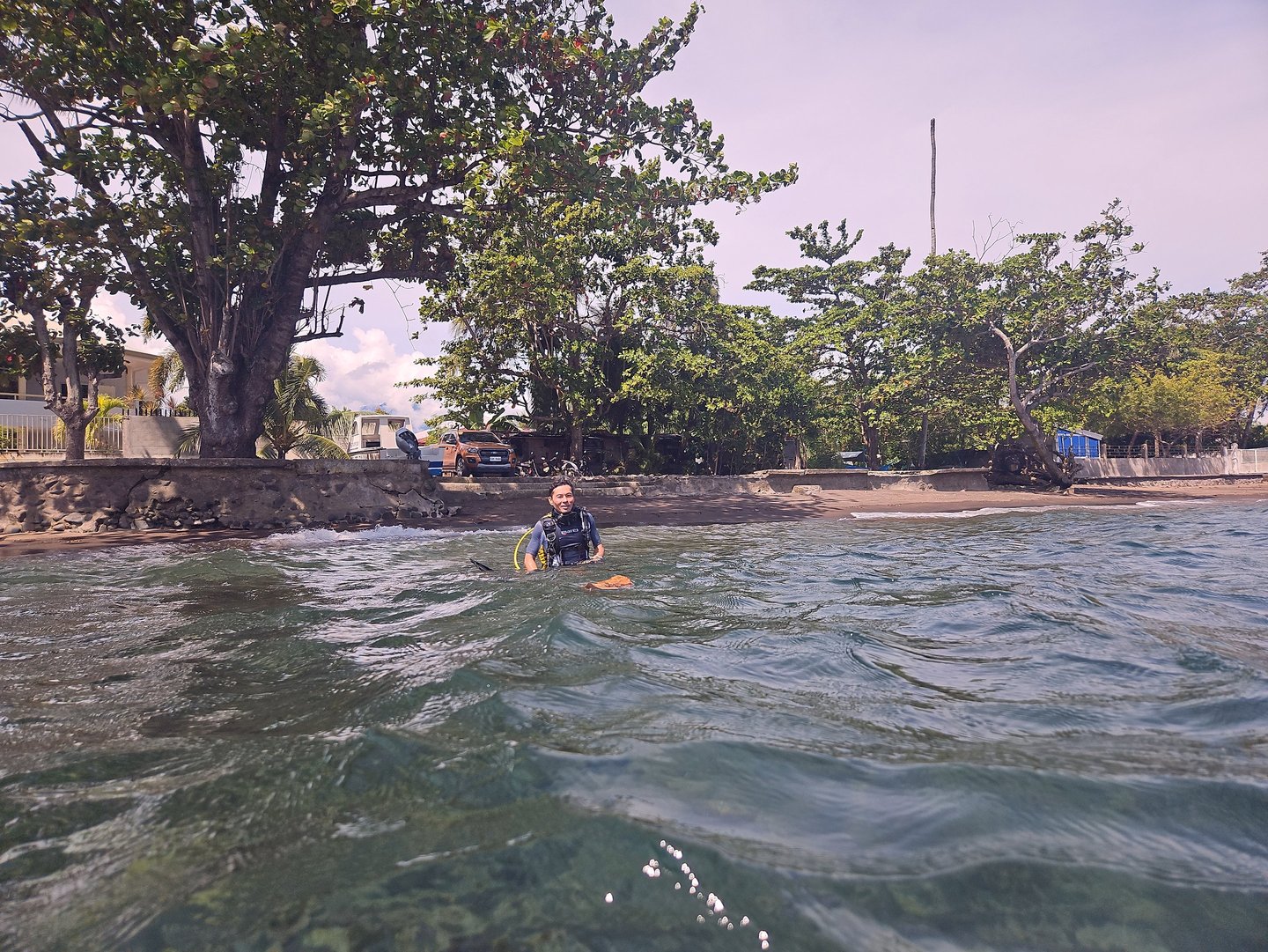
You don't need a boat to reach some of the best diving in the Philippines. You need a jeep and a good pair of eyes. We load the gear into the jeep, drive a few minutes along the coast to the day's sites, and walk in off the beach. It's the quick, low-fuss way to dive, and it gets you underwater while the boat crews are still loading tanks.
The Dauin coast is black volcanic sand, which doesn't sound like much until you see what lives on it. This is one of the world's great muck-diving stretches, a run of small protected sanctuaries packed with the kind of rare critters most divers travel a long way to find. Frogfish, blue-ringed octopus, flamboyant cuttlefish, mimic octopus, seahorses, harlequin shrimp, and nudibranchs in numbers that stop being countable. Dauin's frogfish even turned up in the BBC's Planet Earth III, which tells you something about the company you'll be keeping down there.
It's slow, eyes-down diving, and it suits everyone. The sites are shallow, calm and mostly under 20m with little current, which makes them ideal for a first dive, a nervous returner, or a macro photographer after an hour to get the shot. Our guides are award-winning critter spotters who'll find the thumbnail-sized things you'd swim straight past, because that's the whole job and they're very good at it. Groups stay at four to a guide, which on black sand is the difference between seeing the good stuff and missing it. Do one dive or three, day or night, and build the pace around yourself.
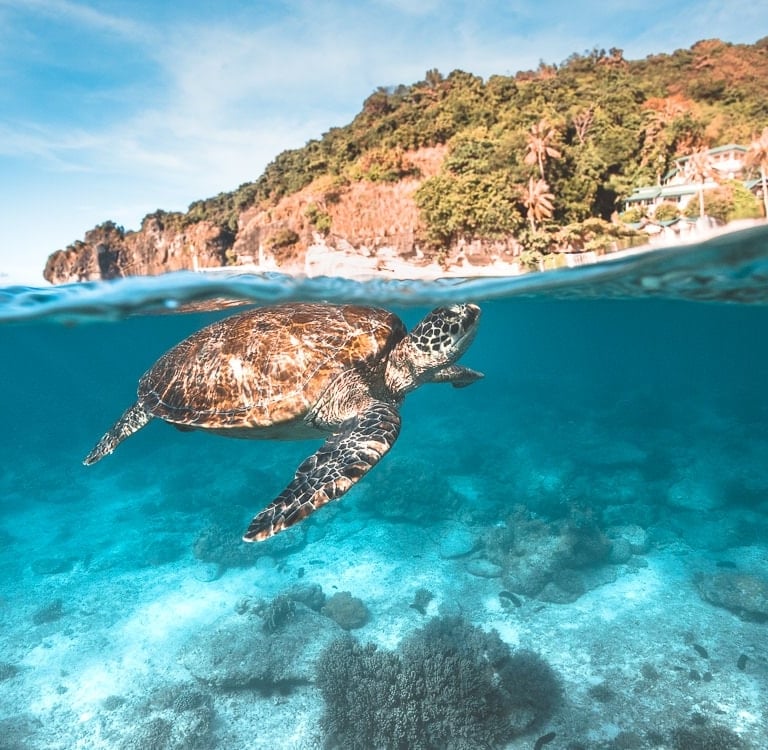
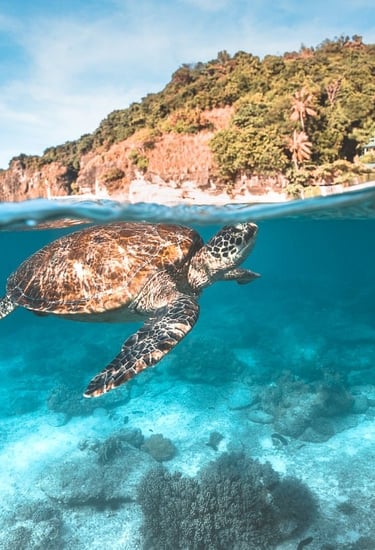
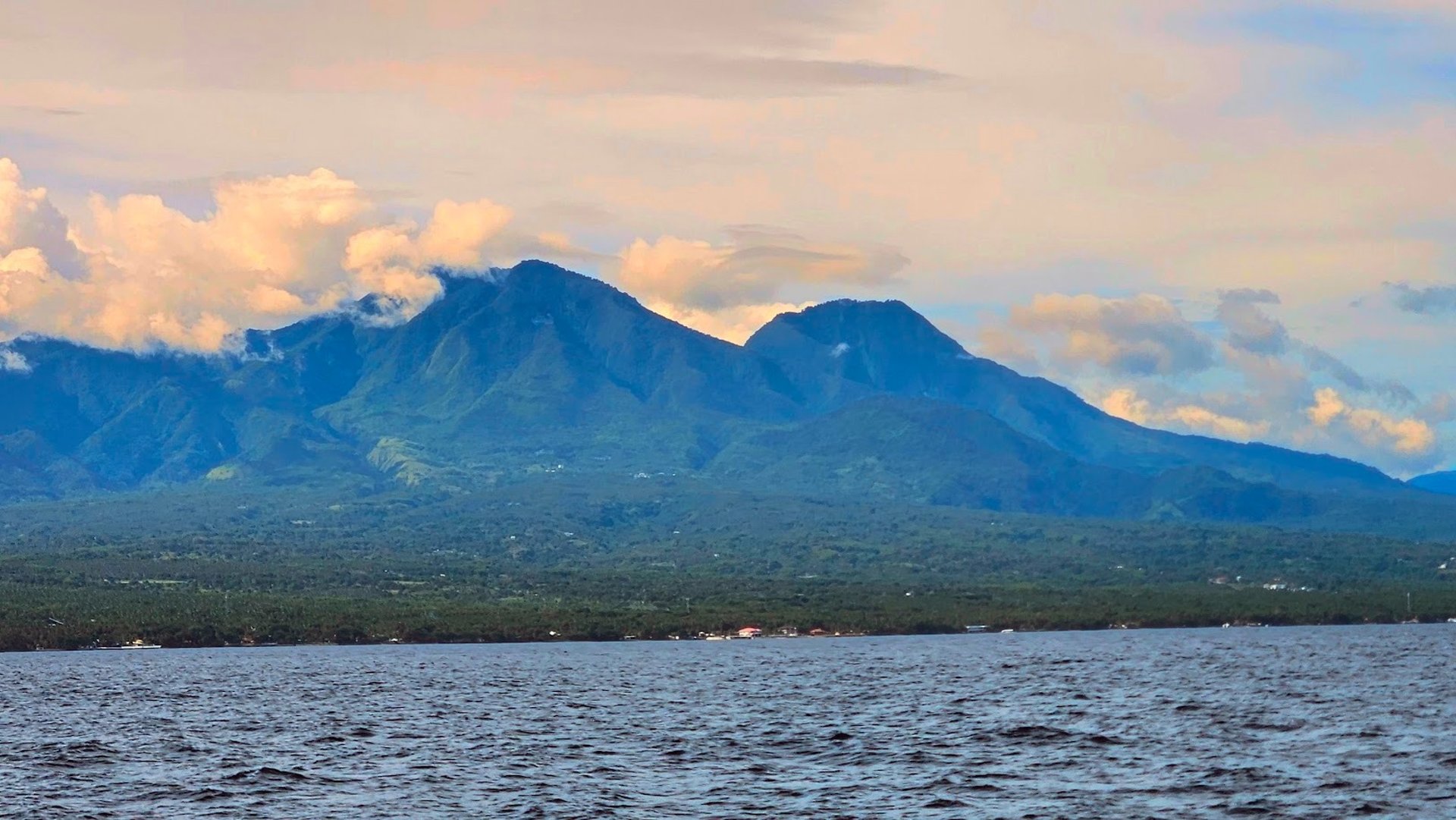
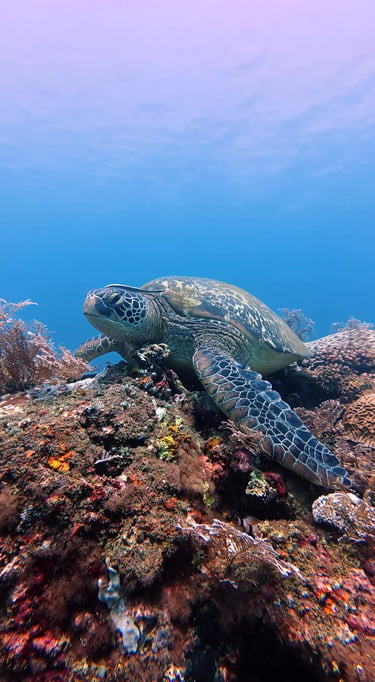
Thirty minutes off the coast sits a small volcanic island that punches well above its size. Apo became a community-run marine sanctuary in 1982, one of the first anywhere, and the model it created went on to shape hundreds of protected reefs across the Philippines. Decades of that protection show the moment you drop in. The walls are draped in soft coral and gorgonian fans, green and hawksbill turtles graze the shallows in numbers that earned the place its "Turtle Island" nickname, and jacks and barracuda hang in the blue where the current runs. Sport Diver once put it among the hundred best dive sites on earth, and it still holds the spot.
We run Apo as a three-tank full day on the 53ft catamaran, which makes the crossing a comfortable one rather than a wet hour on a bench. The sites wrap right around the island, so your guide picks the day's plan from the conditions, and reading those conditions is half the skill. Chapel Point drops down a sloping wall of gorgonians and barrel sponges with turtles working the reef and electric clams tucked in the cracks. Coconut Point is the adrenaline dive, a fast drift past schooling jacks and the odd whitetip when the current's up, best saved for divers who are comfortable in moving water. Rock Point and the coral gardens at Cogon are gentler, shallower, and just as full of life.
It suits every certified level, because the island has both ends of the range and your guide matches the sites to the group. The deeper walls carry on well past where newer divers turn around, which makes Apo a proper day out for advanced and CCR divers too. One thing to watch for: at a couple of sites you'll see fine streams of bubbles fizzing up through the sand, the volcano quietly venting under the reef. Over 400 species of coral and 650-odd species of fish have been logged here. The turtles alone are worth the boat ride.
Apo Island Diving
Coral walls and green turtles, thirty minutes out
Most dives, you look. On these ones, you do something.
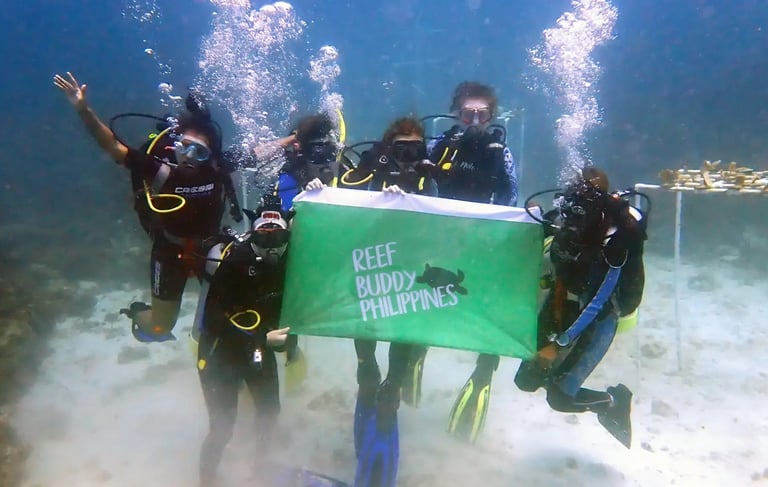
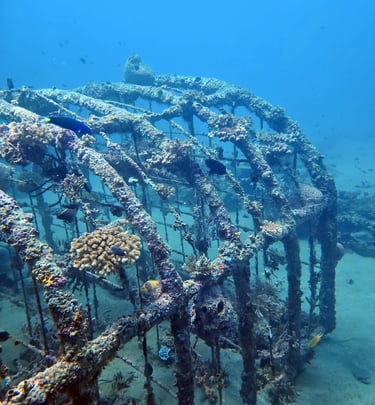
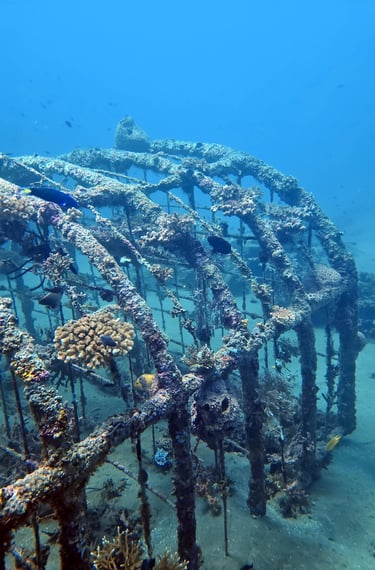
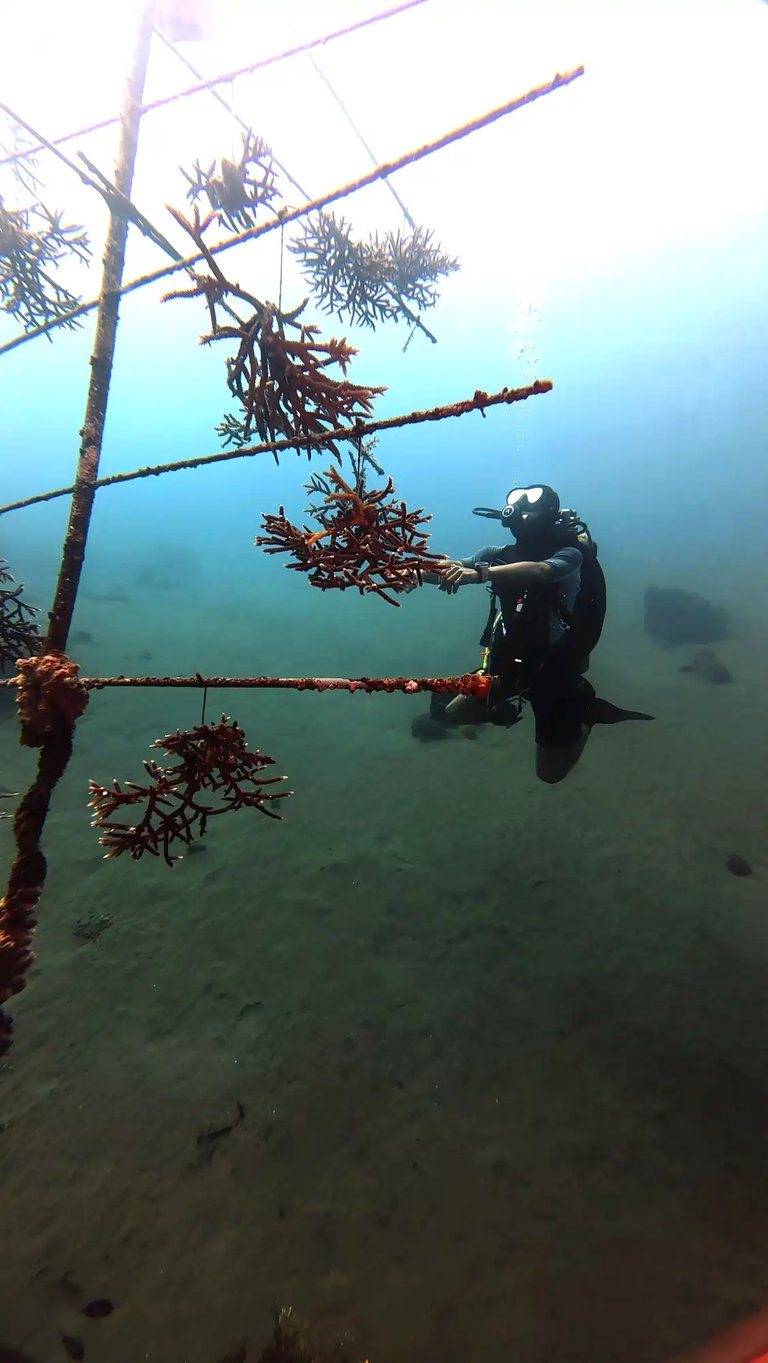
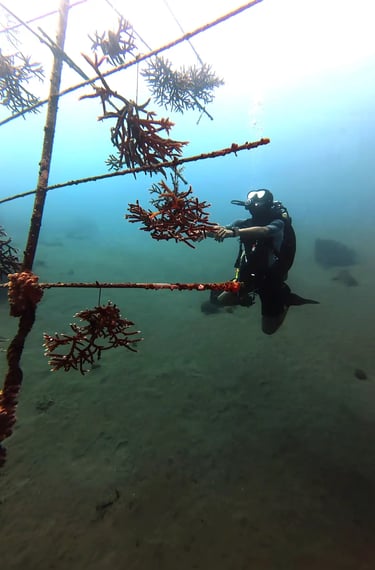
The reef off Dauin is in good shape, but keeping it that way takes work, and a fair bit of that work is the sort a diver can help with once someone shows them how. That's what these dives are. One trip you might be logging which fish are where, building the count that tells us whether a sanctuary is doing its job. Another, tending the coral nursery where fragments are grown out and replanted onto reef that needs them. None of it is difficult. It's careful and useful, and a good deal more satisfying than finning past in a daze.
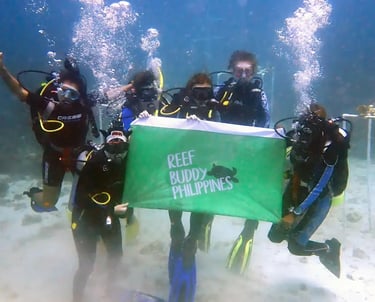
We run it through our partnership with Reef Buddy Philippines, who've brought methods honed over years of restoration work elsewhere and adapted them to this coastline. You don't need a science degree or a wall of certifications. Decent buoyancy and an hour of being shown how, and you'll surface having left the reef a little better than you found it.
Conservation & Citizen Science Dives
Be Part of the Reef’s Future
Questions, Bookings, or Just Curious?
We’d Love to Hear From You.
Contact
Follow what we're finding underwater
Follow
Subscribe
+63 917 779 8761
© 2026. All rights reserved.
Refunds Policy