Scuba Courses
At The Dive Hub, we’ve chosen PADI because it puts flexibility, quality, and community at the heart of scuba training. With digital learning tools, globally recognized certifications, and a focus on building confident, capable divers, PADI makes it easy to learn at your own pace while ensuring every skill is mastered in the water. It’s the perfect fit for our mission: training you not just to dive, but to dive well.
Why Choose Us?
There are plenty of places to learn to dive in Dauin, and on paper they look much the same. Same agency, same certifications, roughly the same prices. The difference is in how the training actually runs, and that's the part you can't see until you're already in the water.
Here's what ours looks like. You're taught by a full-time, salaried instructor who's done this for years, not a traveller filling a season before moving on. Your group never goes above four divers to a guide, so nobody's rushed and nothing important gets skipped. Skills get repeated until they're solid rather than ticked off a sheet. And all of it is built on diving that's careful with the reef and careful with you, because we think that's simply how it ought to be taught.
We're not going to claim we're the best dive school in Dauin. We'd rather just train you properly and let you spot the difference the next time you dive somewhere that doesn't.
PADI courses in Dauin for every level, from first-timer to dive professional
Taught by full-time, salaried PADI instructors with years on these reefs
Maximum four divers per guide, on every course, no exceptions
Learn to dive on Dauin's famous black sand reefs, not a swimming pool
Safety-first scuba training, built around getting you comfortable
No-touch, reef-safe diving taught from your very first breath
A PADI 5-Star dive centre
Small groups, honest pricing, and no corners cut
Learn to Dive
Everything for getting into the water and feeling at home there. First time on a regulator, first proper certification, back after years away, or just getting your buoyancy sorted early on. All of it unhurried, and built around getting comfortable before anything else.
Discover Scuba Diving
Almost nobody forgets their first proper breath underwater. Discover Scuba Diving is that first breath, set up so you can take it without committing to a full course or knowing the first thing about diving. An instructor stays beside you the whole way, so the only job is to relax and look around.
There's a bit of easy theory and a few basic skills in shallow water first, the sort of thing that takes minutes once someone shows you how. Then you go diving, on a real reef, breathing underwater and watching the place go about its business. Plenty of people book it as a one-off holiday tick and walk out signing up for the full course instead. If that's you, the dive you've just done counts towards your Open Water certification, so nothing's wasted.
A single day, no experience needed
Breathe underwater on a real reef, not a pool
An instructor at your side for the whole dive
Counts towards your Open Water course if you carry on
Requirements
Prerequisite: none, just reasonable health
Minimum age: 10
Duration: half a day
Maximum depth: 12m
Price: 4,500PHP
ReActivate
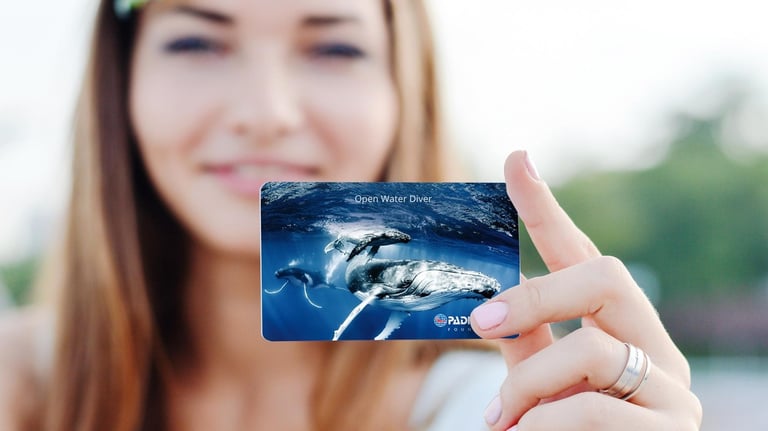
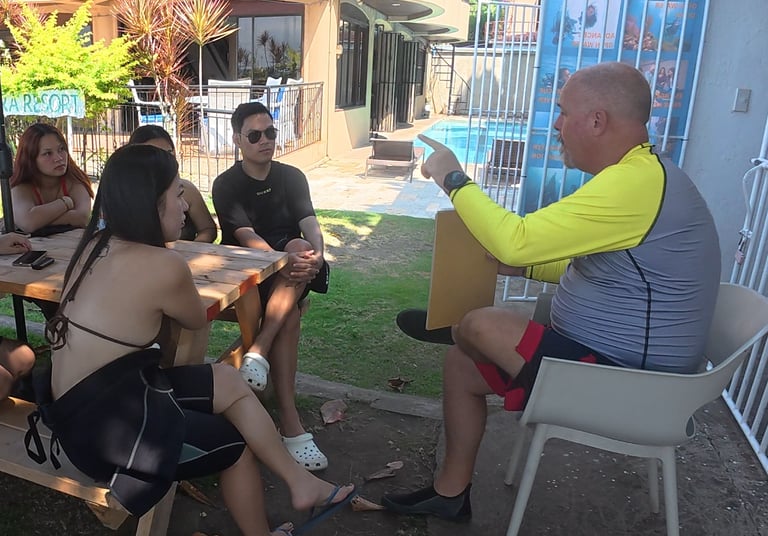
Diving's a skill, and skills go rusty. If it's been a year or three since you last had a regulator in your mouth, ReActivate knocks the cobwebs off before you get back out to anything interesting. No judgement, it happens to nearly everyone.
It starts with a quick run back through the theory, the bits about pressure and air and tables that fade fast when you're not using them. Then you get in the water with an instructor and work through the core skills until they feel normal again, spending the time where you actually need it rather than on a fixed script. You come out with your confidence back and an up to date certification card. Then you go diving properly.
A few hours to shake off the rust
Theory refresh plus real time back in the water
Goes at your pace, not a fixed checklist
Updated certification card at the end
Requirements
Prerequisite: existing scuba certification
Minimum age: 10
Duration: half a day or so
Recommended after any long break from diving
Price: 7,500PHP
Buoyancy is the thing that separates a diver who looks comfortable from one who doesn't. Peak Performance Buoyancy is a short course that sorts it out properly, getting your weighting, trim and breathing dialled so you hang in the water instead of bobbing and finning to stay put. It's probably the most useful two dives you'll ever do.
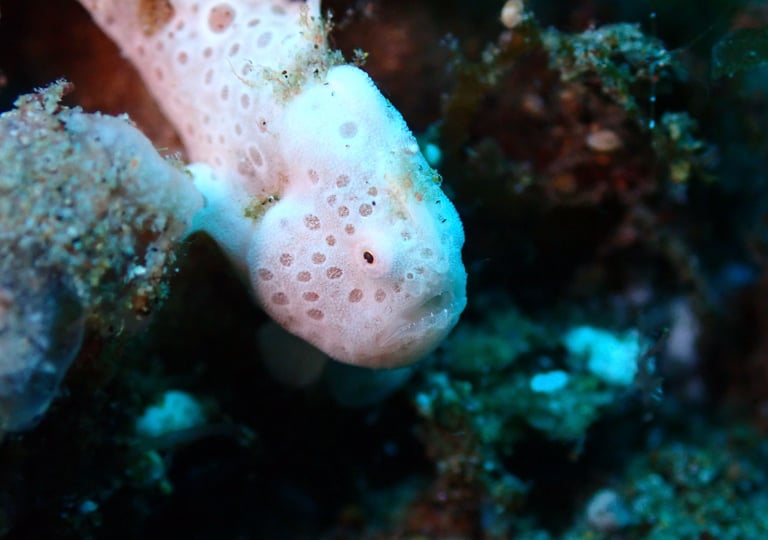
Most divers carry too much lead and fight it the whole dive without realising. This fixes that, so you sit motionless when you want to, glide with less effort and burn through a lot less air, which means longer dives. On a coast like Dauin it's close to essential, because hovering over a frogfish on black sand without kicking up a cloud or brushing the coral is exactly the skill it teaches. It's also the foundation of the no-touch diving the whole operation is built on.
Two dives that fix your buoyancy for good
Use less air and stay down longer
Hover over the smallest critters without touching a thing
The single best upgrade most divers skip
Requirements
Prerequisite: Open Water Diver
Minimum age: 10
Duration: two dives, around half a day
Good for: macro diving and photography]
Price: 10,000PHP
Peak Performance Buoyancy
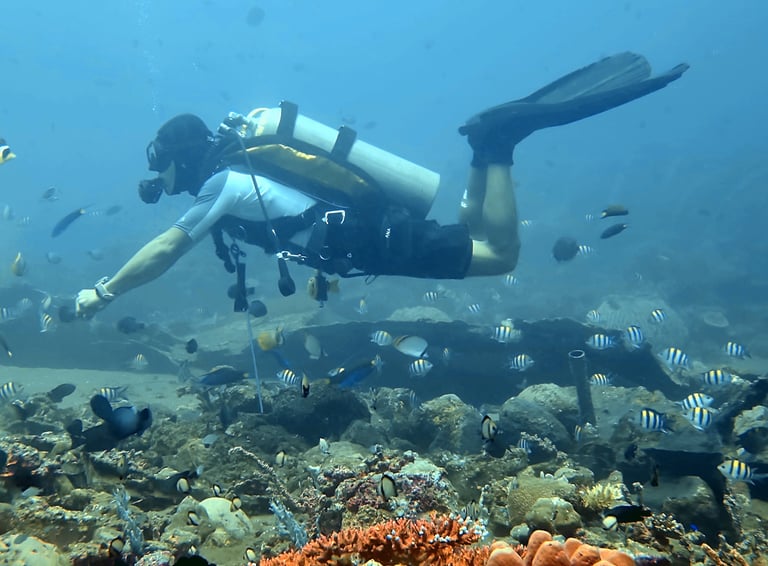
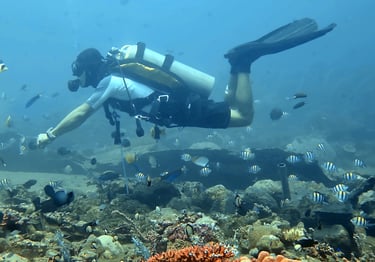
This is the one that actually makes you a diver. Open Water is the certification recognised everywhere, the card that lets you walk into a dive centre anywhere in the world, rent a tank and go. It doesn't expire, so you earn it once and it's yours for life.
The course runs over three to four days at a sensible pace, starting with skills in confined water before heading out to the gentle black sand reefs along the Dauin coast. You'll learn to set up kit, breathe properly, sort yourself out if something isn't right, and move through the water without thrashing about or trampling the reef. Looking after the place is built into the course rather than bolted on, which lines up with how everything's taught here anyway. Groups are kept small, nobody's rushed, and by the end you're cleared to dive to 18m with a buddy, no instructor required.
Three to four days from zero to certified
A licence to dive anywhere in the world, for life
Small groups, never more than four to an instructor
Training dives on Dauin's famous critter reefs
Requirements
Prerequisite: none, must be able to swim
Minimum age: 10
Duration: 3 to 4 days
Maximum depth: 18m
Price: 24,000PHP
Open Water Diver
Keep Learning: Advanced & Specialty Courses
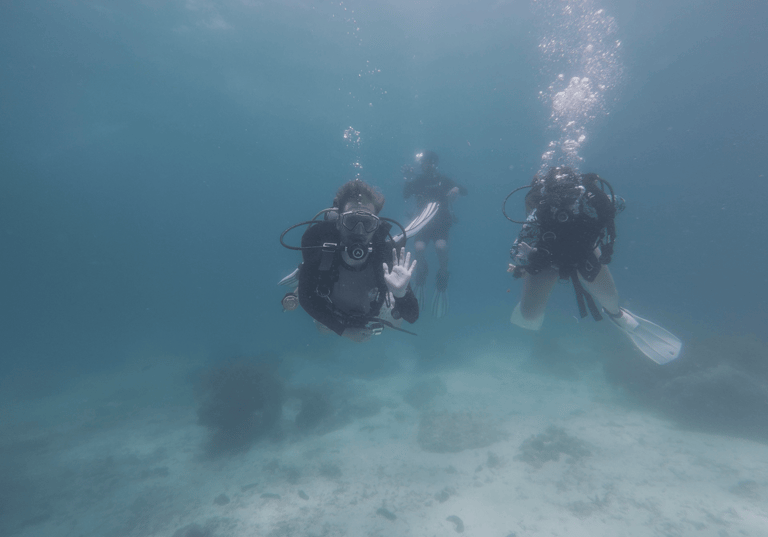
Once the basics are second nature, this is where it gets properly interesting. Go deeper, ride the current along a wall, drop in after dark, and pick up the skills that open up the better dive sites around Apo, Siquijor and Sumilon. Each one adds something you'll actually use out here.
Advanced Open Water
Open Water teaches you to dive. Advanced is where you get good at it. It's five dives rather than a classroom slog, each one a different flavour of diving, and it opens up a lot more of what's down there.
An instructor is alongside you for all five, which is rather the point. Two are fixed: a navigation dive so you can find your way back without surfacing to look, and a deep dive that takes you past the 18m beginner limit. The other three are yours to pick, from drift, night, buoyancy, wreck and more, depending on what you fancy and what the conditions are doing. The depth limit jumps to 30m, which is exactly what you need for the walls at Apo and the drop-offs at Sumilon. Most people do it straight after Open Water because it builds confidence quicker than quietly racking up holiday dives on your own.
Two to three days, five different dives
Drops you onto Apo's walls and Sumilon's depths
Pick the dives that actually interest you
The fastest route from beginner to confident
Requirements
Prerequisite: Open Water Diver
Minimum age: 12, or 15 for full certification
Duration: 2 to 3 days
Maximum depth: 30m
Price: 22,000PHP
Deep Diver
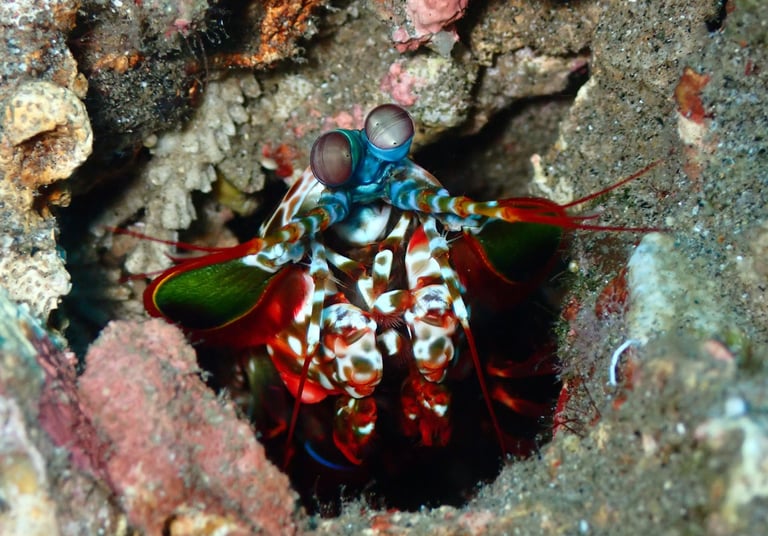
Some of the best stuff sits just below where most divers are allowed to go. Deep Diver extends your limit to 40m, the bottom of the recreational range, and teaches you to operate down there safely instead of just going deep and hoping. It's the difference between visiting depth and actually being comfortable at it.
Going deep changes things. You've got less time before you need to head up, your air goes quicker, and narcosis can creep in and make you a bit daft without you noticing, so the course is about planning for all of that and spotting it when it happens. You build up across a series of dives rather than dropping to 40m on the first day. Down there the walls at Apo and Sumilon carry on well past where the beginners turn around, and that's a lot of reef worth reaching.
Reach 40m, the edge of recreational diving
Unlocks the deeper walls at Apo and Sumilon
Learn to plan air, time and depth properly
Build up gradually, never thrown in deep
Requirements
Prerequisite: Advanced Open Water
Minimum age: 15
Duration: 2 to 3 days
Maximum depth: 40m
Price: 15,000PHP
The reef after dark isn't the same reef. Wait until the sun's down and a different cast comes out, the daytime fish tucked away and the hunters out working, all picked out in the beam of your torch. Night Diver teaches you how to dive into that and enjoy it, rather than feeling your way around blind.
A lot of it is about being comfortable when your world shrinks to a cone of torchlight and the surface is just black above you. You'll learn to navigate in the dark, signal with your light, stay with your buddy and keep track of where you are. Then you get to use it, watching octopus hunt across the sand, picking out crabs and shrimp and the odd thing you've never seen before. The shallow, sheltered sites along the Dauin coast are about as good a place to learn it as exists.
Three dives into a reef most people never see
Octopus and critters that only come out after dark
Learn to navigate and signal by torchlight
Dauin's calm coastal sites, ideal for first night dives
Requirements
Prerequisite: Open Water Diver
Minimum age: 12
Duration: three night dives
Price: 12,200PHP
Night Diver
Drift diving is about as close as diving gets to flying. Rather than swimming a site, you drop in and let the current do the work, carrying you along the reef while it slides past underneath. It sounds like it should be unnerving. It's one of the most relaxing things in the sport.
The skill is in going with it properly instead of fighting it, staying with the group, holding your depth and using a float and reel so the boat knows where you are. Once it clicks, you just hang there and enjoy the ride. It's exactly what you want for the faster sites around here, like Coconut Point at Apo and the Sunken Island drift off Siquijor, where the current is the whole point. Learn it once and a chunk of the best diving in the region opens up.
Cover a whole reef without lifting a fin
The skill you need for Apo's Coconut Point
Floats, reels and going with the flow
More relaxing than it sounds, and a proper buzz
Requirements
Prerequisite: Open Water Diver
Minimum age: 12
Duration: two dives, part of a day
Covers: float, reel and current technique
Price: 12,000PHP
Drift Diver
Search & Recovery
Everyone drops something in the water eventually. A phone off a boat, a GoPro, a dropped weight, somebody's wedding ring. Search & Recovery is how you go down and actually find it, then get it back to the surface, instead of waving about hopefully and giving up.
There's a proper method to it, search patterns you run so you cover ground without missing chunks or swimming in circles, plus the navigation to manage it in poor visibility. Then there's the recovery side, using a lift bag to bring up things too heavy to carry, which is more of an art than it looks the first time one shoots to the surface without you. It sharpens your navigation and problem solving more than almost anything else. And if you go pro later, you've got a head start on that part of the Divemaster course.
Find lost gear and actually get it back
Proper search patterns, not guesswork
Learn to raise heavy objects with a lift bag
Sharpens navigation more than any other specialty
Requirements
Prerequisite: Advanced Open Water, or Open Water with Underwater Navigator
Minimum age: 12
Duration: around four dives
Covers: search patterns and lift-bag use
Price: 10,000PHP
Become a Safer Diver: Rescue & Safety Courses
The courses that make you the diver people want to buddy with. First aid that works anywhere, handling problems before they turn serious, and finding and recovering lost gear. Worth doing whether you ever need them, which is rather the point.
Emergency First Response
This is the first aid course, and it's worth doing whether you ever dive again or not. EFR covers what to do in the first few minutes of an emergency, the bit before the professionals arrive, when what a bystander does actually matters. It works the same in a dive boat as it does in a kitchen or a car park.
You'll learn CPR, how to handle someone who's choking, bleeding or in shock, and how to keep a level head while doing it. It's hands-on and not remotely scary, taught on dummies with plenty of practice until the steps stick. There's no diving involved and no experience needed, so anyone can take it. It's also the first aid qualification you need before you can start Rescue Diver.
A single day that's genuinely useful for life
CPR and first aid that work anywhere, not just diving
Hands-on practice, no experience required
Opens the door to the Rescue Diver course
Requirements
Prerequisite: none
Minimum age: none, open to all
Duration: about a day
Required within 24 months before taking Rescue Diver
Price: 9,000PHP
Rescue Diver
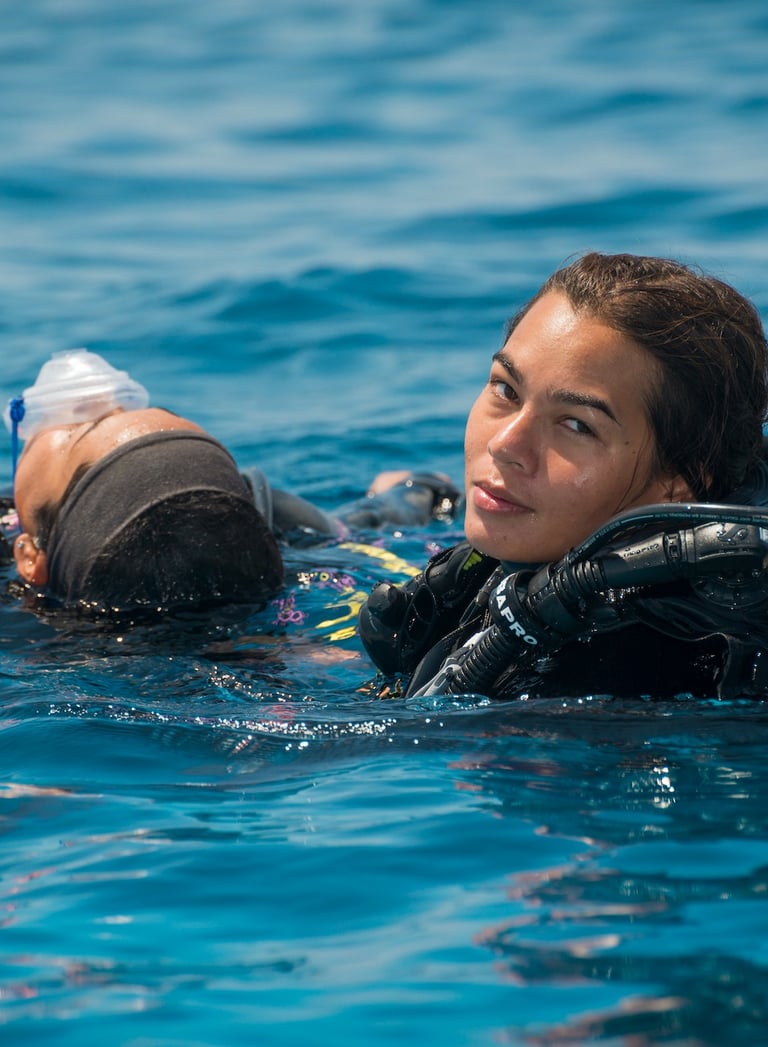
Most courses are about looking after yourself. Rescue is where that flips and you start looking after everyone else, which is a bigger shift than it sounds, and the reason so many divers call it the best course they've done. It's the one that turns you from someone who can dive into someone worth diving with.
Half of it happens before anything goes wrong. You learn to read a group and catch the small signs that someone's struggling, usually well before they'd admit it themselves. The other half is hands-on and properly knackering: bringing up a panicking diver without getting pulled under, towing someone who's run out of gas, getting an unresponsive diver out of the water and keeping air going into them while help's on the way. You'll swallow a bit of seawater and earn the certification the hard way. Most people come up buzzing, surprised by how much fun the worst-case scenarios turned out to be, and a lot steadier in the water for it.
Three days that change how you dive
Learn to spot trouble before it starts
Real rescue scenarios, not just theory
The course every good buddy has done
Requirements
Prerequisite: Advanced Open Water, or Adventure Diver with the Navigation dive
Minimum age: 12, or 15 for full certification
Duration: 3 to 4 days
Also required: current EFR first aid, within the last 24 months
Price: 24,000PHP
Go Pro: Become a Divemaster
The step from keen diver to working professional. Divemaster is where you start guiding, assisting on courses and taking charge in the water, and it's the foundation a diving career is built on. A serious commitment, and the way into the industry.
This is the one where diving stops being a hobby and starts being a job. Divemaster is the first professional rating, the point where you cross from guest to crew, guiding certified divers, helping run courses and taking real responsibility for people in the water. It's a serious step and the foundation every diving career is built on.
It isn't a few days, it's weeks to months, and it's as much about who you become as what you learn. You'll sharpen every skill you've got, learn to plan and lead dives, manage groups and handle whatever the day throws at you, until running a dive feels like second nature. Part of the role is getting other people to care about what's down there, which is no bad thing to be paid for. Training with a full-time team in a place like this is about the best grounding there is, with the muck of Dauin and the reefs of Apo, Siquijor and Sumilon as the classroom. You walk out of it a professional, with a qualification recognised anywhere there's water.
The first step to working as a diver
Weeks of real training, not a quick course
Guide and assist across Apo, Siquijor and Sumilon
A professional rating recognised worldwide
Requirements
Prerequisite: Open Water, Advanced and Rescue, plus current EFR
Minimum age: 18
Duration: several weeks to months
Also required: 40 logged dives to start, 60 to certify, and a medical
Price: Please Contact Us
Training With Integrity
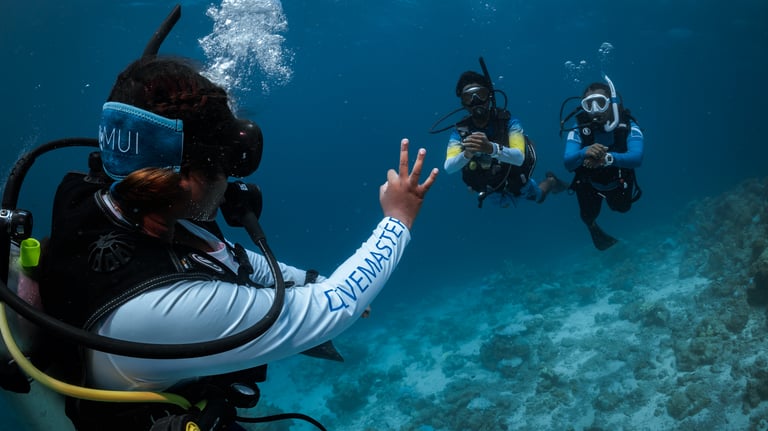
Most new divers have no way to judge what good instruction looks like. You haven't done it before, so you're trusting us. We take that seriously.
Every course at The Dive Hub is taught by full-time, salaried instructors — people who teach because it's their job, not because they picked up a shift. Groups stay small. Skills get repeated until they're solid, not ticked off a list. You leave knowing you can actually dive, not just hoping you can.
That's what a PADI 5-Star centre is supposed to mean. It's what we make sure it does.
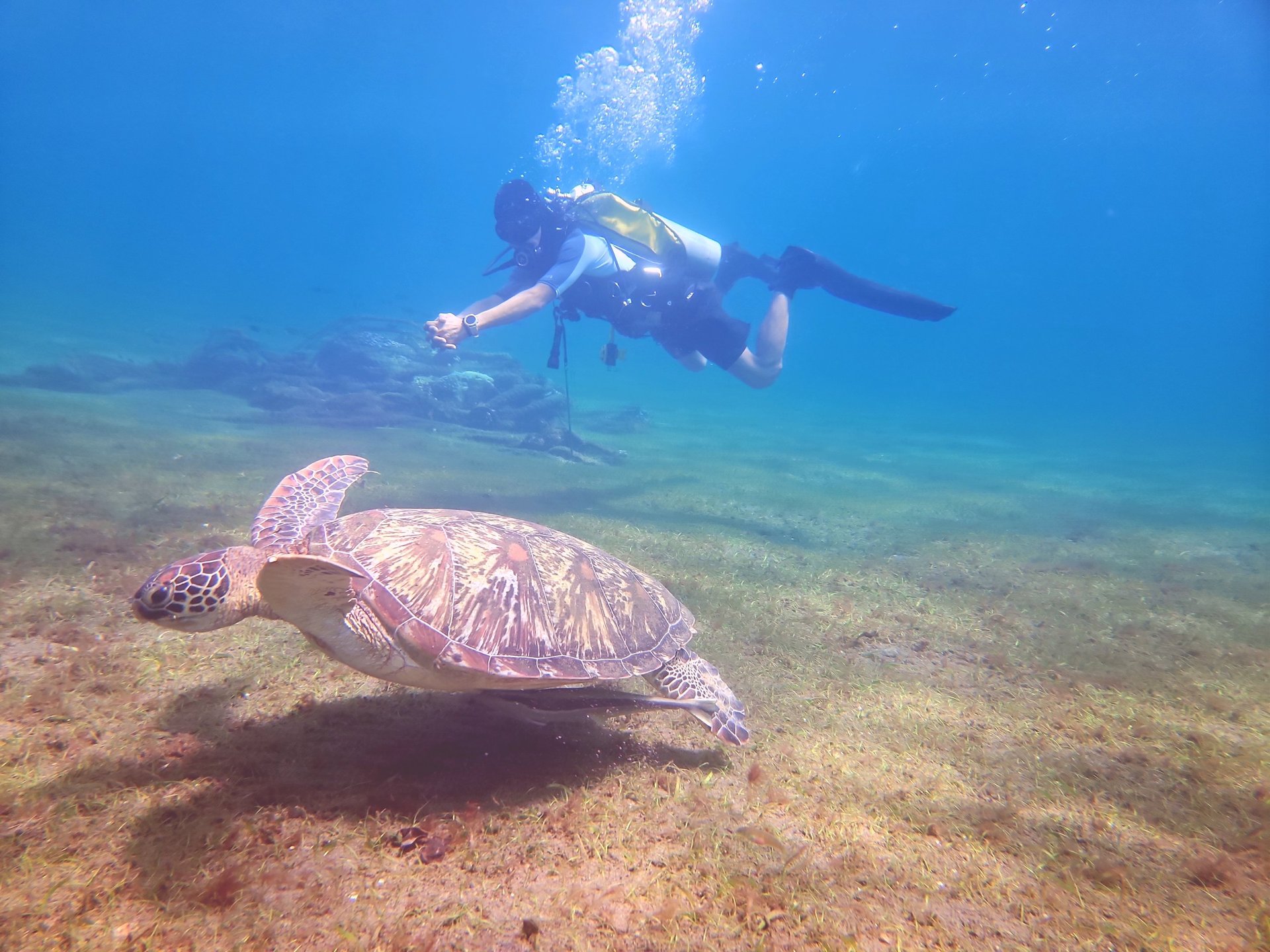
Talk to One of Our Instructors
If you're interested in talking to one of our team about your training needs, and how The Dive Hub can help you learn more about Scuba Diving, fill in the form below and we'll come straight back to you.
Contact
Follow what we're finding underwater
Follow
Subscribe
+63 917 779 8761
© 2026. All rights reserved.
Refunds Policy